The Legacy of a Stateman
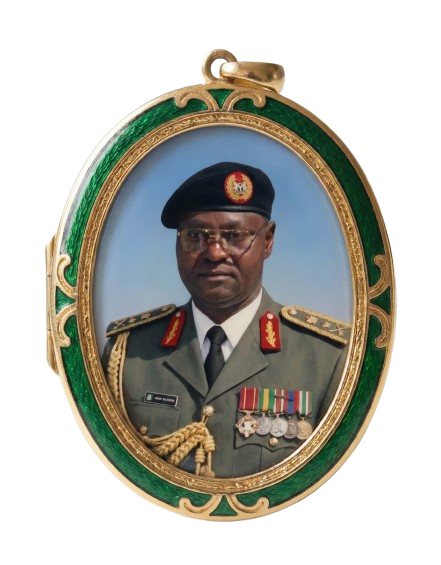
The Legacy of a Statesman is a commemorative platform honoring the 83rd Birthday of Gen. Abubakar. It serves as a living repository of his enduring impact on leadership, democracy, and peace.
Early life and education
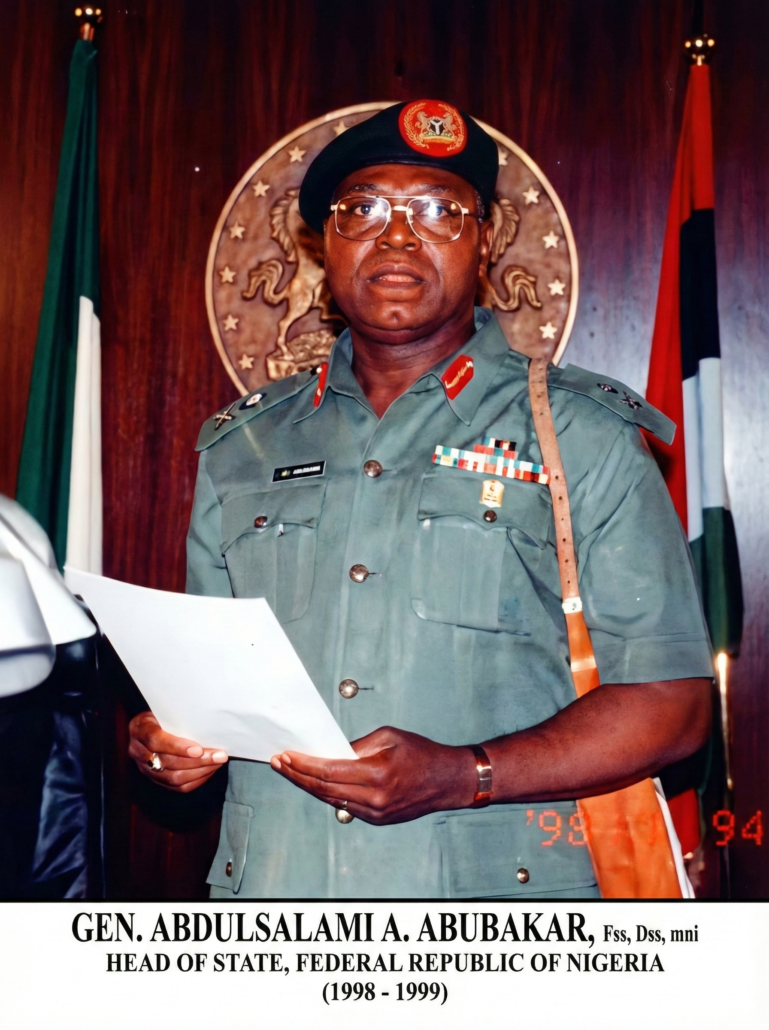
General Abdulsalami Abubakar, GCFR, CSG was born on June 13, 1942, in Minna, Niger State, into the family of Alhaji Abubakar Jibrin and Hajiya Fati Kande Mohammed. His educational journey was marked by diligence and discipline. Beginning at Gwari Native Authority Primary School (1950–1956), he proceeded to Government College Bida (1957–1962). Seeking further knowledge, he attended Kaduna Technical College for post-secondary studies in 1963, laying the technical foundation for his future career.
RAW FACT
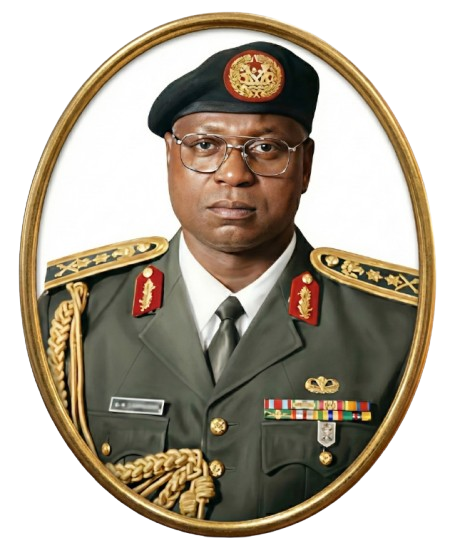
His illustrious military career commenced on October 3, 1963, enlisting as an officer cadet in the Nigerian Air Force. Following intensive training in Germany (1964–1966), national exigencies led to his reassignment to the Nigerian Army. He was commissioned Second Lieutenant on October 20, 1967. Over 36 years, he rose through the ranks with distinction, becoming Major General in 1991. His intellectual pursuit of military strategy saw him attend the National Institute for Policy and Strategic Studies (NIPSS) in Kuru, becoming an MNI in 1985.
PERSONAL LIFE
He is married to Hon. Justice Fati Lami Abubakar, former First Lady and former Chief Judge of Niger State. They are blessed with six children. He enjoys photography, reading, squash, tennis, football, and jogging.
General Abdulsalami Abubakar remains a global icon of peace, a moral compass for Nigeria, and a distinguished statesman whose legacy continues to shape the African continent.
On June 8, 1998, destiny placed him at Nigeria’s helm. His tenure, though brief, was transformative. He established the Independent National Electoral Commission (INEC) and guided the nation through a decisive transition to democracy, ending years of military rule.
Post-office, Gen. Abdulsalami A. Abubakar, GCFR, CSG became one of Africa’s most trusted mediators, contributing to peace efforts in Zimbabwe, DRC, Liberia, Chad, Sudan, The Gambia, Zambia, and Niger Republic. He served under the AU, ECOWAS, UN, the Commonwealth, and The Carter Centre.
As Chairman of the National Peace Committee, he has played a pivotal role in ensuring peaceful elections in Nigeria since 2015.
He has been awarded multiple honorary doctorate degrees, national decorations, and international honours - including the Peace Prize Award (Rainbow Push Coalition) and Liberia’s National Distinction of the Order of the Pioneers.
To expand on this sentiment is to tell the story of a man who found himself at the helm of a nation during its most fragile hour and chose the path of integrity over the allure of power. When people speak of General Abdulsalami Abubakar, they are rarely speaking solely of a military career; they are speaking of a legacy defined by peace-building, promise-keeping, and quiet diplomacy.
If one were to distill everything people have said into a single ethos, this would be it. You can read more beautiful pieces about his character and the ‘life architect’ who made him who he is today. We have articulated his experiences, honors, and significance in various pieces of writing.
TRIBUTES FROM FRIENDS AND FAMILY
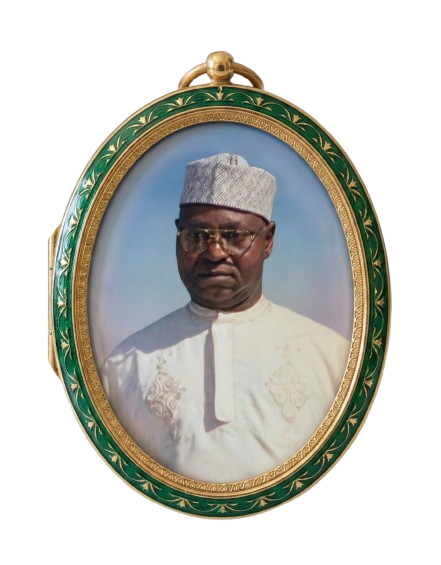
In a nation of diverse tongues and faiths, General Abubakar is the language of unity we all understand. As a son of the soil and a leader of men, he has shown that nobility is not found in the regalia one wears, but in the integrity of one’s heart. He is a bridge-builder who respects tradition while championing the progress of the future.
Capital is a coward; it flees from conflict. The thriving private sector we see in Nigeria today was built on the foundation of stability laid in 1999. General Abubakar’s short but impactful tenure opened Nigeria back up to the world, allowing businesses to breathe, grow, and compete globally. He understands that without peace, there can be no prosperity.
Working beside him on the National Peace Committee, I have witnessed firsthand a man who listens more than he speaks—a rare quality in leadership. He has turned his retirement into a full-time vocation for Nigeria’s stability. When political tensions rise, it is often his calm voice that lowers the temperature. He is, without doubt, Nigeria’s moral compass.